
I have several files which have no handles and I’d like to add a handle to them.
How is this done? What keeps the handle on given that the end of the file is tapered?
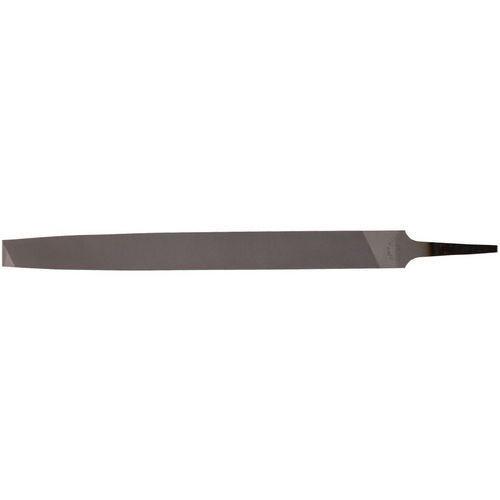
The files look like the one in the attached photo.
Thanks
I have several files which have no handles and I’d like to add a handle to them.
How is this done? What keeps the handle on given that the end of the file is tapered?
The files look like the one in the attached photo.
Thanks
Get It All!
UNLIMITED Membership is like taking a master class in woodworking for less than $10 a month.
Start Your Free Trial







Replies
Oh, oh oh I know that one
It is the wedge shape and wedge action that holds the handle on.
If making a handle from scratch bore a hole along the axis of the handle longer than the tang ( tapered area of the file )
Bore the hole large enough in diameter so the the tang is at least half way into the handle with an easy push.
To get the tang deeper into the handle jam the handle on with hand pressure then . . .
holding the handle upper most with the file dangling downward bellow it . . . take a mallet and strike the end of the handle many times until the file is seated as far as it will go.
One would think this would knock the file out of the handle and onto the floor but . . . due to the magic of the universe the file tang will travel upward and deeper into the handle.
At this point you can just use the file.
Ok, referring to the photos the ruler is a one foot rule to demonstrate that even huge files stay in the handles just fine using this wedge in the hole method.
The first file from the top has a handle on it that I made from scratch from a tree branch , (I think it was a branch. It has been more than twelve years or so . . . I am sure I made it though).
The file second from the top has a commercially available file handle. I think I ordered it from Grangers.
The best handles for files , in my opinion, are wire wrapped.
The handle that is by its self with no file is another style. It has a metal wire tube inside or a metal threaded tube. I forget which. I don't like them. They grip OK but get rattly and it is harder to fine tune the hole so you can get all the tang into the handle.
The file balances better or feels better to use if you get most all the tang into the handle.
I suppose one could file the heck out of the tang to get more in the handle. Even though this looks like a great handle I would avoid them
The file third from the top was a quick O' dickO that my surfer girl did when she got in a mood. You know the mood. The "I just got to get a handle on my file RIGHT NOW and get on with this" mood.
Probably similar to the mood you are in right now
: )
I don't use that file a lot but it has stayed on for about twenty years. Basic dowel with a hole in it. The hole is not large enough or deep enough or something but hey it is a working handle. It has a crack. What ever.
The file on the bottom of the photo is a REAL wood workers rasp. Nicholson 55 I think. The handle came from Lee Valley or maybe Highland Woodworking. I don't remember but I think it is just a hole with the metal ferrule and no inside spring/threaded tube. Seems to work well. The dip / necked down area may provide a bit more control and feed back for woodworking. I don't need that for metal working so experiment for yourself.
OK now for the details :
The wire wrap does not have to be done after putting the handle on the file. Probably preferable to wrap it first.
The ends of the wire go into holes drilled perpendicular to the handle axis and are just enough larger than the wire guage to get it to slide in. At the small end the wire just sticks through and the file tang folds it over and holds that end.
The end of the wire on the big end also goes into a hole in the handle but, as you can see, it is soldered for more strength.
I used galvanized wire because it was what I had on hand. The commercial handle uses stainless steel wire.
If you go to the Lee Valley web site you can down load or just read a very detailed description of how the Japanese chisels are installed in the handles. Very similar. They tend to like to heat the tang very hot to burn the wood to the shape of the tang as it is malleted into the handle as described above. May be a good idea especially since they tend to use much harder wood in the handles like oak or ebony.
The best description I have seen is in Toshio Odate's book here
http://www.amazon.com/Japanese-Woodworking-Tools-Tradition-Spirit/dp/0941936465/ref=sr_1_1?s=books&ie=UTF8&qid=1324771800&sr=1-1
A must have book. Great read even if you don't ever work wood.
If you have any questions let me know.
Photos for Jyang949
Comment field is required so here it is.
Small addition to Roc's answer
Roc has given you a great reply. The only thing I would add is that you can drill a stepped hole in the handle by using the largest diameter drill bit (just smaller than the width of the tang) first and then proceeding deeper with the hole using progressively smaller bits until you drill to the maximum depth needed. Three or four steps is all thats needed. This will give you a tapered hole in which to seat the tang providing more wood on metal contact and less chance of splitting the handle when you drive it onto the file. If this sounds like too much trouble, file handles aren't that expensive. You can buy them from Woodcraft, Highland Woodworking, or propably your local hardware store.
gdblake
commercially made handles
Commercially-made handles, such as these, are also available:
http://www.lie-nielsen.com/catalog.php?sku=handles
The Lie Nielsens are so inexpensive they are practically free
Plus a bit of shipping
I think I wound up making the one shown for two reasons : I was new at woodworking and it was a chance to make something from wood to practice and Grangers and every where else I tried was out of the largest wire wrapped file handles and I had just bought a new monster size file that I wanted to take into the fray.
Thank you for adding that.
>drill a stepped hole in the handle by using the largest diameter drill bit (just smaller than the width of the tang) first and then proceeding deeper with the hole using progressively smaller bits until you drill to the maximum depth needed.<
Thank you for pointing that out.
File handles
gdblake and roc have good answers, here is my method. I turn my own handles. Last year I did all my favorite files at the same time. Each file tang was traced on paper and marked for three step holes. The three bits were marked for depth of cut with blue tape. Each handle ended in a section that was the same size as the brass nuts I use for ferules. (did I spell that right?) The ferules were then threaded onto the handles by using a wrench and going back and forth until the nut is seated tightly to the top of the handle. The stepped holes are drilled on the drill press without moving the handle so they all center on each other. A squirt of CA (super glue) goes down the hole and the file is hammered in. Squeeze out is wiped off and CA accelerator is sprayed at the tang/handle interface, and bob's your uncle!
I found that using maple I needed the extra strength of the brass to keep from splitting the handles.
Thanks for all the info
Looks like a fairly simple task - once you know how ;)
thanks to all!
Two other options, most hardware stores have file handles that you twist the file into just like a bolt into a nut. The file handle has threads like a die and they cut into the file tag. Another option is take a golf ball and drill a hole about half way through the ball and drive the tag of the file into the ball. Cheep and you can use different color balls for different files :)
Good Grief.....
First find a virgin ash tree in an untouched ancient burial ground, cut it down and apologize to mother earth for the act, after which you must don hair shirt and roll around in a gravel pit as an act of contrition, in absence of a suitable hair shirt and said gravel pit, self flagellation with a bicycle chain will do.
Cut a section of trunk of a suitable length and rive the handle blank from it with maul, axe and froe. Rough shape the blank with drawknife and spoke shave on the shave horse. Air dry for one year. Mount the blank on the lathe and turn the handle to the required dimensions. Drill the minor hole for the tang, using chisels and plane floats, carefully carve and with the aid of carbon paper fit by trial and error the tapered tang, this usually requires a minimum of three days. After the handle is complete, gather a quantity of walnut husks and steep in warm water for 24 hours. While the walnut stain is steeping, prepare a wash coat of half Yak sperm and half rain water collected in a hand thrown ceramic pot. After applying the wash coat, stain the handle. Allow the stain to cure for 8 hours and then apply a minimum of 12 coats of boiled linseed oil, allowing at least a day for each to dry. Your handle is now ready for installation.
Or.... you can go to the hardware store, buy a handle for $3 and shove the file into it......
This forum post is now archived. Commenting has been disabled